🐶 Franklin, our therapy dog, is recovering well and is back to doing what he loves. Learn more.

🐶 Franklin, our therapy dog, is recovering well and is back to doing what he loves. Learn more.

Preserve more of your natural tooth structure with a conservative restorative approach designed to repair damaged teeth while minimizing unnecessary removal of healthy enamel and dentin.
Biomimetic dentistry is a restorative approach focused on repairing damaged teeth while preserving as much healthy natural tooth structure as possible.
The word “biomimetic” means to imitate biology. In dentistry, that means paying attention to how enamel and dentin work together, respond to pressure, and support the function of a healthy tooth.
Rather than removing additional tooth structure simply to fit a particular restoration, biomimetic dentistry uses conservative preparation, adhesive bonding, and restorative materials to rebuild damaged areas while preserving healthy tissue when possible.
At 214 Dental Arts, Dr. Leena Rama Ponnapalli uses biomimetic principles when evaluating teeth affected by decay, cracks, wear, or previous dental work. The goal is not to avoid every crown or root canal. It is to determine what the tooth actually needs and preserve healthy structure whenever the clinical situation allows.
Every time a tooth requires restorative treatment, the amount of healthy structure that remains matters.
Enamel and dentin provide the natural foundation of the tooth. Biomimetic dentistry focuses on keeping as much of that foundation intact as possible rather than removing healthy structure unnecessarily.
For some teeth, that may allow for a more conservative bonded restoration. For others, the amount of damage may still make a crown, root canal, or another treatment the better option.
The treatment should fit the condition of the tooth, not the other way around.
Biomimetic dentistry is not one specific procedure. It is an approach that can influence how a damaged tooth is evaluated and restored.
Depending on the condition of the tooth, biomimetic principles may be considered when:
Not every damaged tooth can be treated conservatively.
An examination is needed to determine how much healthy structure remains, whether the nerve of the tooth is involved, and which type of restoration is appropriate.
Dr. Leena Rama Ponnapalli completed a one-year mastership program in biomimetic dentistry in 2021. The program emphasized conservative and biologically sound techniques designed to preserve natural tooth structure while restoring damaged teeth.
That training shapes how she approaches restorative treatment at 214 Dental Arts.
Rather than beginning with a predetermined restoration, Dr. Leena evaluates the condition of the tooth, how much healthy structure remains, and which treatment can restore function without removing more tooth structure than necessary.
Learn more about Dr. Leena Rama Ponnapalli >
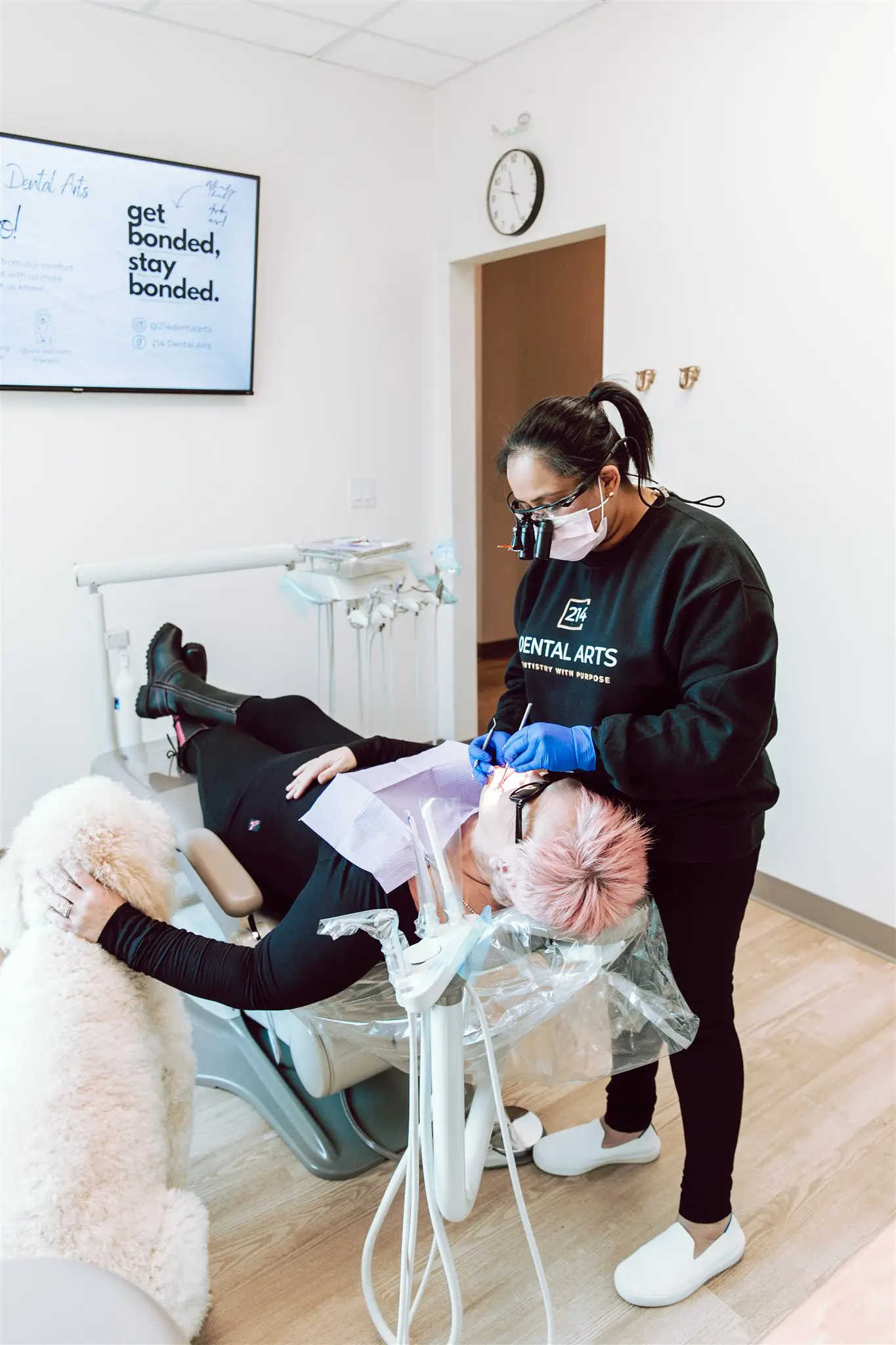
Treatment begins with a careful evaluation of the tooth.
Dr. Leena will look at the extent of decay or damage, existing restorations, remaining healthy tooth structure, and the condition of the dental pulp before recommending treatment.
If a biomimetic approach is appropriate, treatment generally focuses on three priorities:
The exact procedure depends on the tooth being treated.
During your visit, the team can explain what they see, which options are available, and why a particular treatment is being recommended.
Biomimetic dentistry is sometimes described as a way to avoid crowns or root canals, but that is not always possible or appropriate.
In some situations, a conservative bonded restoration may allow more natural tooth structure to remain than a full-coverage restoration would require.
In other cases, a crown may still be the right treatment because too much of the tooth has been damaged or weakened.
Root canal treatment may also be necessary when the dental pulp is irreversibly inflamed, infected, or otherwise unable to recover.
The goal of biomimetic dentistry is not to avoid these treatments at all costs. It is to preserve healthy structure when doing so is safe and appropriate.
When the condition of the tooth makes a conservative restoration possible, biomimetic dentistry may offer several practical advantages.
Biomimetic treatment emphasizes conserving healthy enamel and dentin rather than removing additional structure simply to accommodate a restoration.
Adhesive restorative techniques can allow the restoration to work with the remaining tooth structure rather than requiring the tooth to be reshaped more extensively.
Treatment planning considers how biting forces affect both the restoration and the remaining tooth structure.
Preserving healthy structure today may leave more natural tooth available if the tooth requires additional treatment later.
No dental restoration lasts forever. Longevity depends on the tooth, restoration type, bite forces, oral habits, hygiene, and other clinical factors.
The purpose of biomimetic dentistry is to restore the tooth responsibly while preserving as much healthy structure as possible.
If you have a cracked, damaged, or heavily restored tooth, Dr. Leena can evaluate how much healthy structure remains and explain whether a biomimetic approach may be appropriate.
The easiest tooth structure to preserve is the tooth structure that never needs restorative treatment.
Regular dental exams, professional cleanings, good home care, and early evaluation of changes such as cracks, sensitivity, or failing restorations can help identify problems before they become more complicated.
At 214 Dental Arts, prevention and biomimetic dentistry support the same broader goal: keep healthy natural teeth intact for as long as reasonably possible and treat problems based on what is actually present.
The video gives patients another way to understand how biomimetic dentistry approaches the restoration of damaged teeth while preserving natural structure.
Biomimetic dentistry places particular emphasis on preserving healthy tooth structure and using adhesive restorative techniques that work with the remaining tooth.
Conventional restorative dentistry can also be conservative, and treatments such as crowns remain appropriate in many situations.
The difference is not that one approach is always better than another. The key question is how much healthy tooth structure can safely be preserved in a specific case.
The primary benefit is conservation of healthy tooth structure.
When appropriate, biomimetic techniques may allow a damaged tooth to be restored without removing as much additional enamel and dentin.
Treatment also considers how the restoration bonds to the tooth and how forces are distributed through the restored area.
The specific benefits depend on the condition of the tooth and the type of restoration required.
That depends on the condition of your tooth.
Biomimetic principles may be useful when a tooth has decay, a crack, wear, or an older restoration and enough healthy structure remains to support a conservative repair.
An examination is needed to determine whether a bonded restoration is appropriate or whether a crown, root canal, extraction, or another treatment is necessary.
In some cases, a bonded restoration may allow more natural tooth structure to remain than a full-coverage crown would require.
However, not every tooth can be restored that way.
The recommendation depends on how much healthy tooth remains, the location and extent of the damage, and the forces placed on the tooth.
Biomimetic treatment aims to preserve healthy tooth structure and protect the dental pulp when possible, but it cannot guarantee that a root canal will be avoided.
If the pulp is irreversibly inflamed, infected, or severely damaged, root canal treatment may still be necessary.
There is no single lifespan for a biomimetic restoration.
Longevity depends on factors such as the type and size of the restoration, the condition of the tooth, bite forces, oral habits, hygiene, and regular dental care.
The goal is to create a well-bonded restoration while preserving healthy tooth structure and monitoring the tooth over time.
Coverage depends on the specific procedure being performed and the details of your dental plan.
“Biomimetic dentistry” may not appear as a separate insurance category because insurance typically applies to the actual restorative procedure being completed.
The 214 Dental Arts team can help review the proposed treatment and explain how your benefits may apply.
The “death cycle” describes how repeated damage and increasingly large restorations can leave a tooth with less natural structure over time.
A small cavity may eventually require a larger restoration. If the tooth continues to lose healthy structure through decay, fractures, or repeated treatment, more extensive procedures may eventually become necessary.
This progression is not inevitable.
Biomimetic dentistry focuses on preserving healthy tooth structure whenever possible so that treatment does not remove more of the tooth than necessary.
[Keep existing tooth death-cycle graphic here.]
No.
Biomimetic dentistry is a conservative restorative philosophy, not a promise that more extensive treatment will never be necessary.
Crowns, root canals, and extractions remain important treatments when the condition of the tooth calls for them.
The goal is to preserve natural structure whenever doing so is safe and clinically appropriate.
%20(2).png)
No.
Biomimetic dentistry is a conservative restorative philosophy, not a promise that more extensive treatment will never be necessary.
Crowns, root canals, and extractions remain important treatments when the condition of the tooth calls for them.
The goal is to preserve natural structure whenever doing so is safe and clinically appropriate.
If you have a cracked, damaged, or heavily restored tooth, or you have been told that significant restorative treatment may be needed, a consultation can help you better understand your options.
Dr. Leena will evaluate the tooth, explain how much healthy structure remains, and discuss which treatment options fit the clinical situation.
You will have a clearer understanding of what is being recommended and why before deciding how to move forward.

214 Dental Arts is located at: 4320 Windsor Centre Trail, Suite 400
Flower Mound, TX 75028
Book Online or Call (214) 432-0094 to schedule your visit.